Support
The following examination methods were employed:
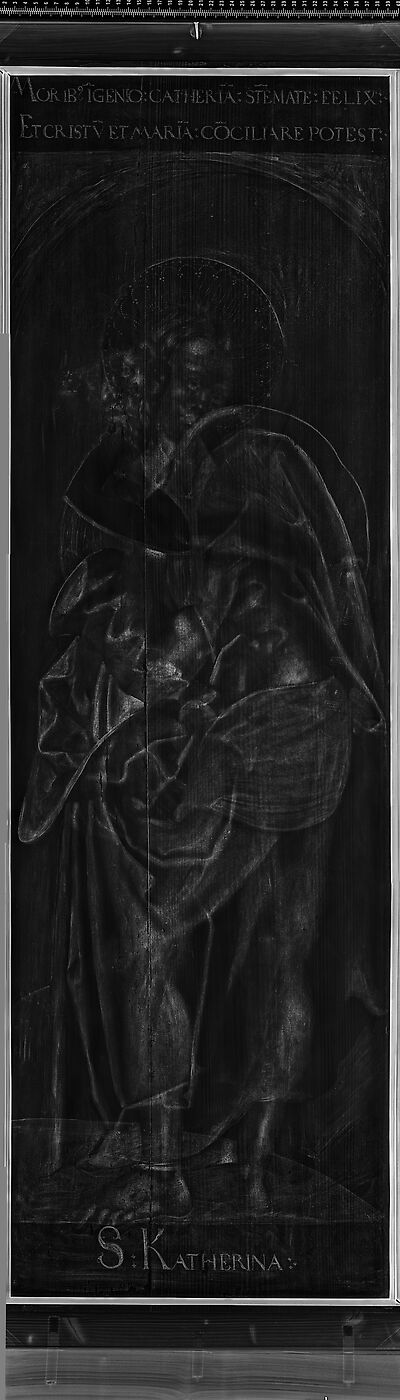
Stereomicroscopy, XRF analysis (Thermo Scientific - Niton XL3t GOLDD+), UV- light , X-radiography (Oehm and Rehbein, Leonardo/ Varex-Perkin Elmer XRPad2 4336) and Infrared reflectography (Osiris 900 - 1700 nm)
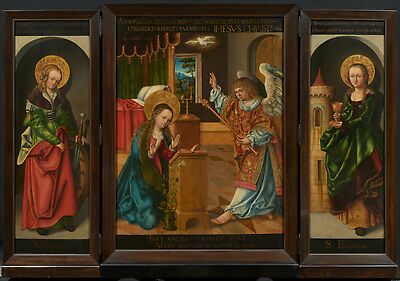
The wing panels consist of three vertically aligned boards of similar width. In the X-radiograph their wooden structure appears very similar to that of the central panel, suggesting fir was also used for both wings.
Both wing panels also exhibit a fibrous application in three horizontally aligned strips at the top, centre and bottom.
Ground and Imprimatura
The ground is a white layer containing calcium.
A ground was applied to both sides of the wing panels. Barbes are also visible in the X-radiographs. In several areas, the X-radiography reveals bubbles in the ground layer. The X-radiograph doesn't show any evidence to suggest the presence of a lead-white imprimatura.
Underdrawing
Inner sides of the wing panels:
The infrared reflectogram shows underdrawing lines executed using a liquid grey-black medium and brush. The partial use of a pen cannot be ruled out. Contours and essential details appear to be outlined with sweeping confident lines.
In several areas there are slight deviations between the compositional layout in the drawings and the painted execution.
Outer sides of the wing panels:
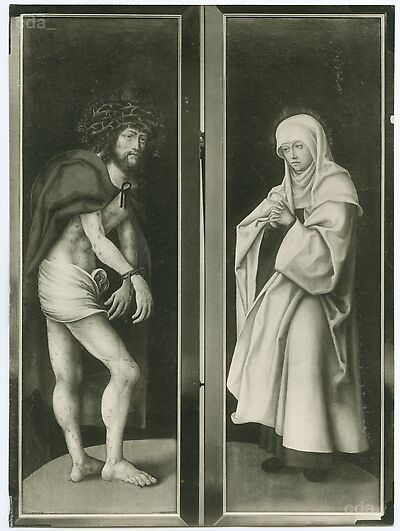
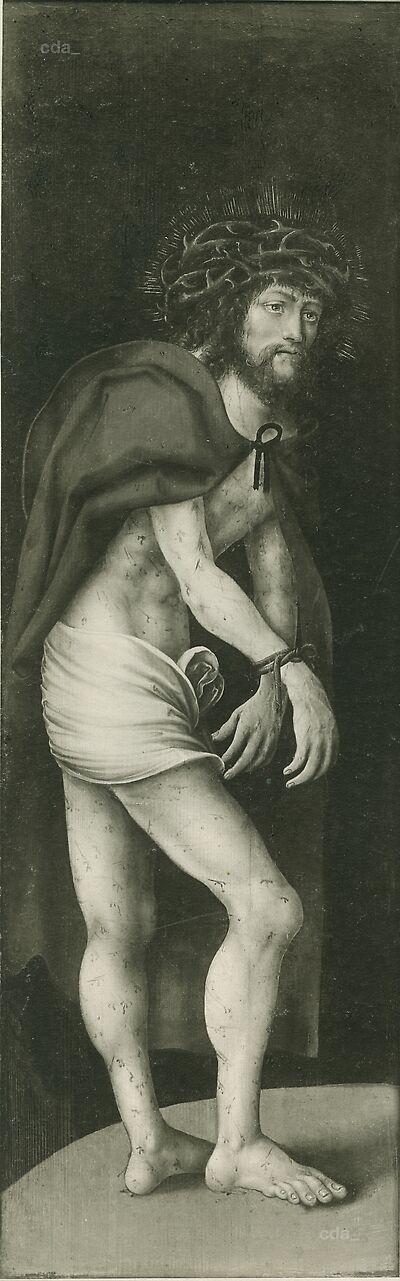
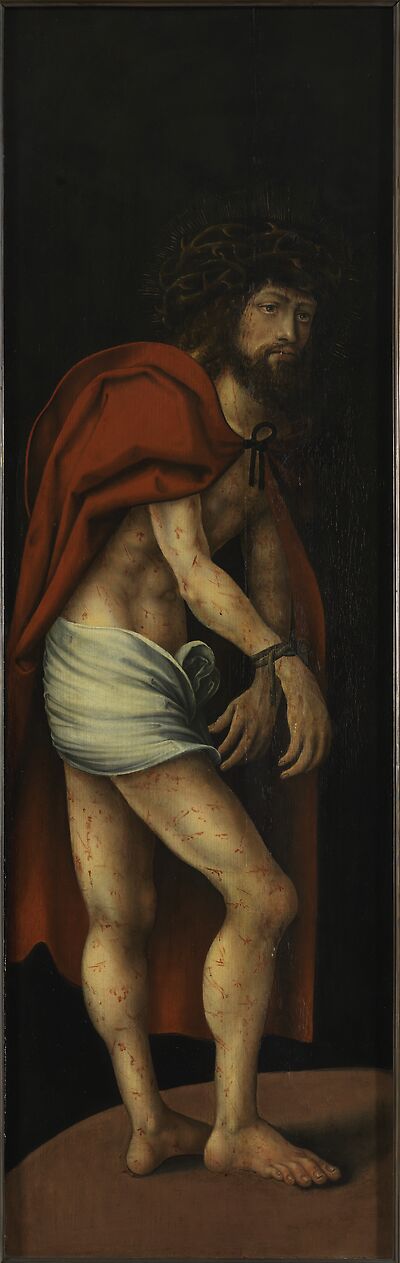
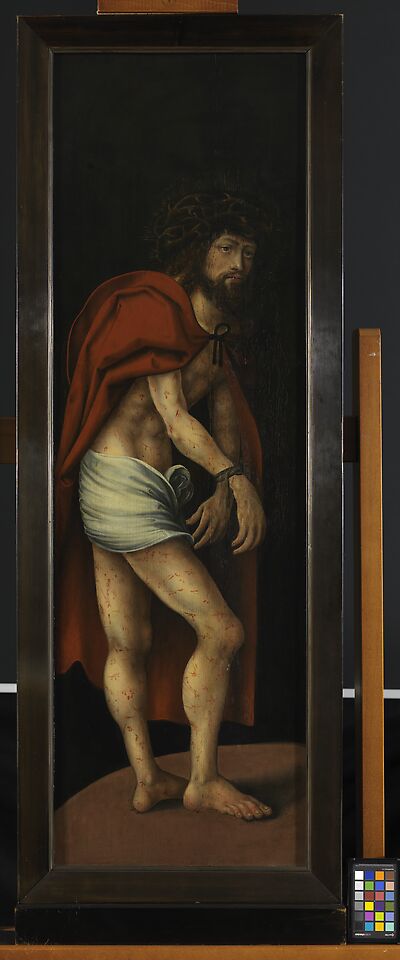
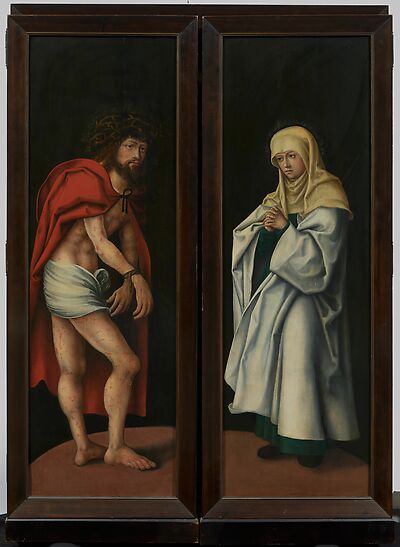
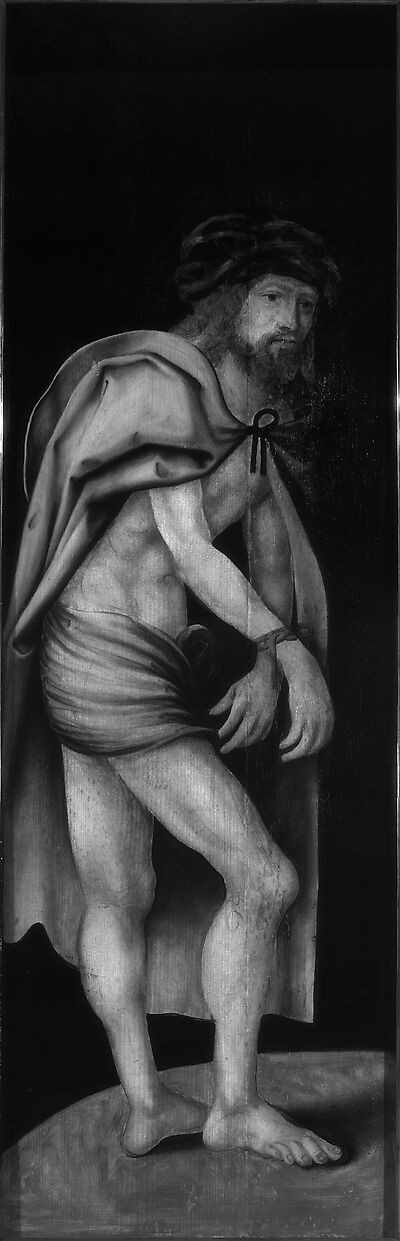
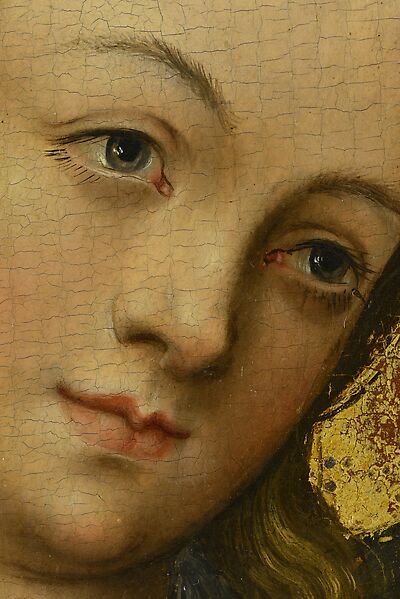
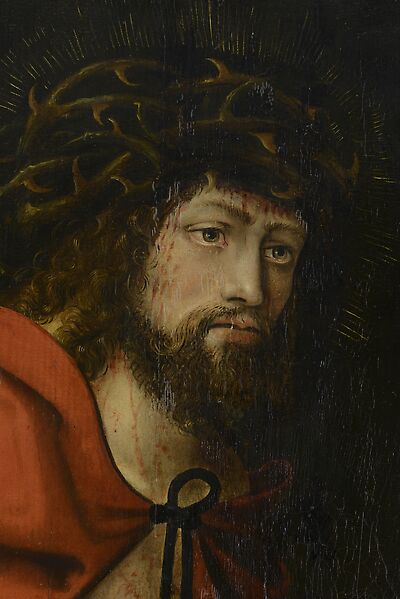
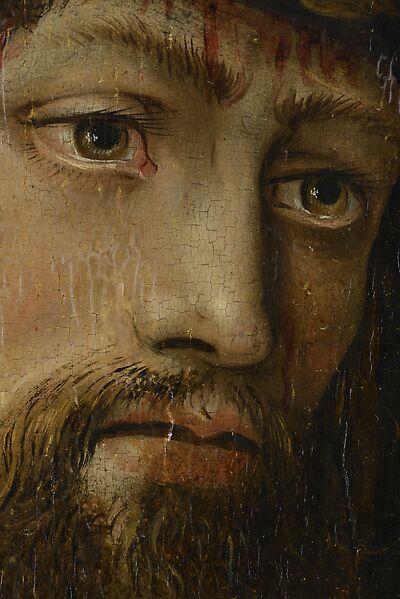
The depictions of Mary and Christ on the exterior of the wings appear more sketchily outlined with numerous searching lines. The contours of the faces and robes have also been corrected several times before being fixed in the final painted version. Occasionally the lines appear to break up into individual dots when enlarged.
Paint Layers and Gilding
The following elements were detected by XRF and after comparing their optical characteristics were following pigments were identified:
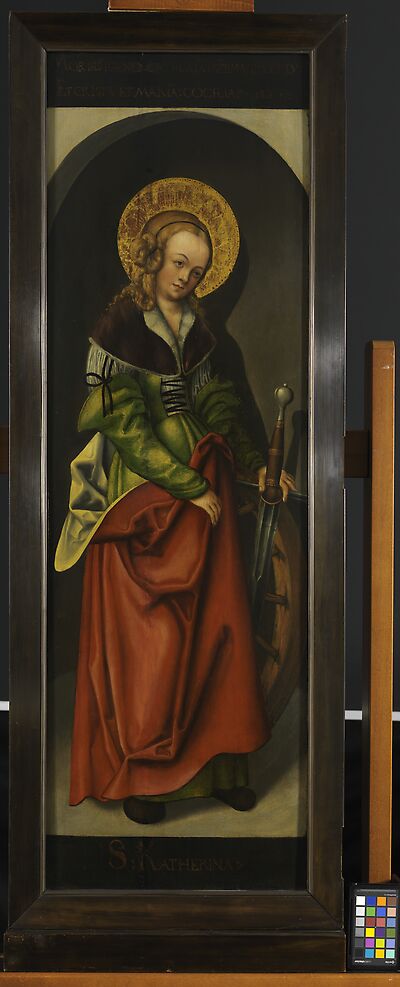
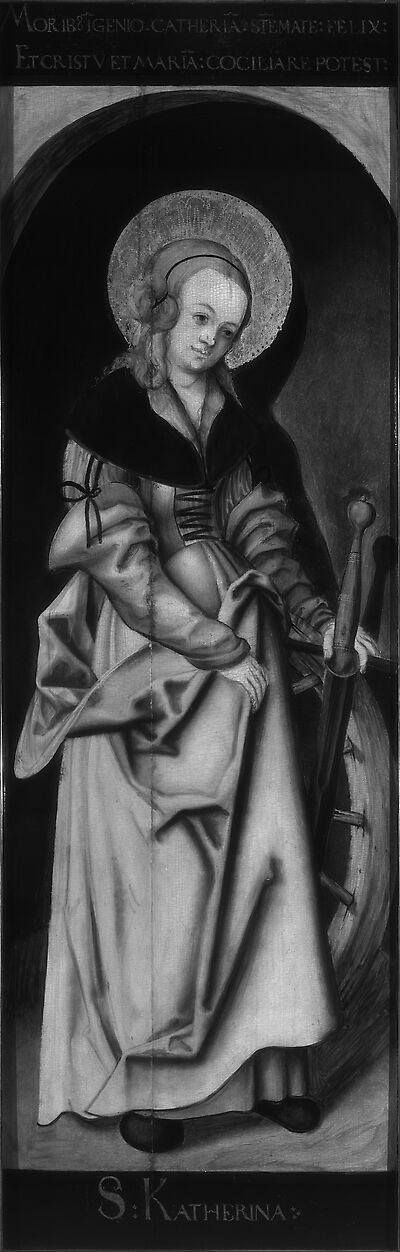
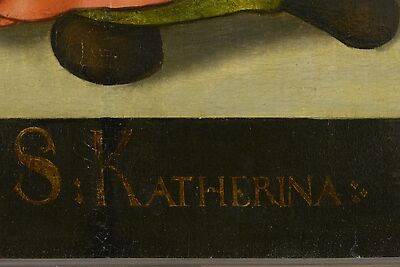
Left wing (St Catherine)
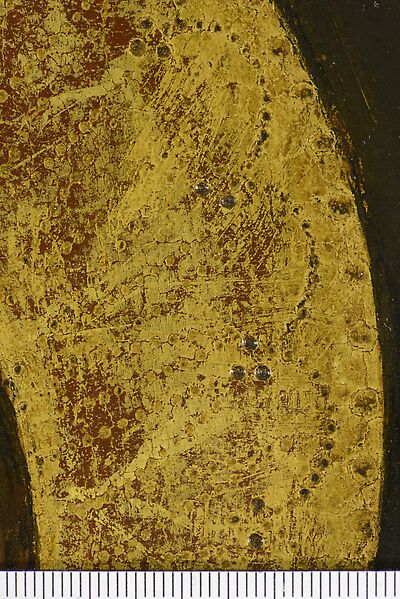
Gold MP 1: Ca, Fe, Au, Pb, Ti, Sr (Ag)
Ca: chalk/ gypsum; Fe/ Ti: iron oxide/ ochre/ bolus; Au: gold; Pb: lead white; Sr: component of 'chalk' (?)
Yellow MP 2: Ca, Pb, Fe, Sn, Hg Sr
Ca: chalk/ gypsum (?); Pb: white lead; Fe: iron oxide/ ochre; Pb/ Sn: lead tin yellow; Hg: vermiilion; Sr: component of 'chalk' (?)
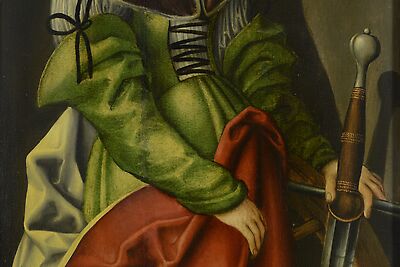
Green MP 3: Cu, Ca, Pb, Fe, Sn, Sr
Cu: Copper green / blue (?); Ca: chalk / gypsum (?); Pb: Lead white; Pb/ Sn: lead tin yellow; Sr: component of 'chalk' (?)
The following pigments were identified in the paint layers (results from all three panels) : Lead white, lead-tin yellow, yellow ochre, red iron oxide pigment, vermilion, azurite and copper-containing green pigment. Gold and Zwischgold used as metal leaf. Brass powder (gold bronze) was used for retouching.
See the unpublished examination report for a more detailed description of the painting process.
[Blumenroth, Heydenreich unpublished examination report, 07.01.2024]
- examined by Diana Blumenroth
- examined by Gunnar Heydenreich
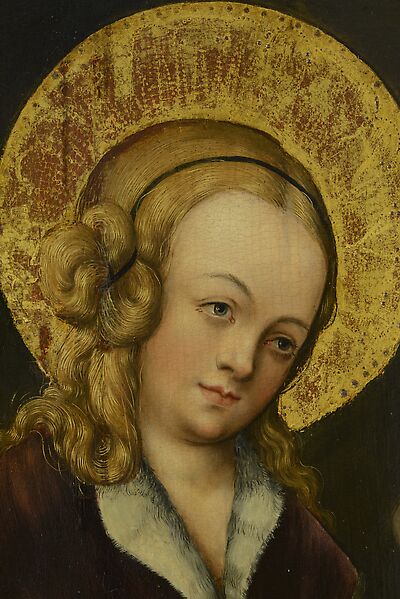
![Triptych [left wing]: St Catherine [recto]; Christ as the Man of Sorrows [verso]](https://lucascranach.org/imageserver-2022/PRIVATE_NONE-P439_FR-none/01_Overall/PRIVATE_NONE-P439_FR-none_2023_Overall-s.jpg)
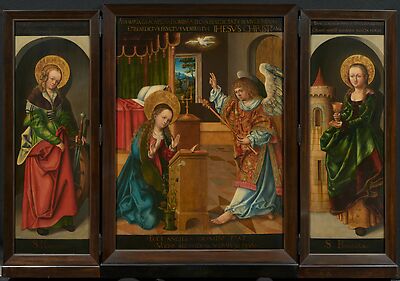
![Triptych [right wing]: St Barbara [recto]; Mary, Mother of Sorrows [verso]](https://lucascranach.org/imageserver-2022/PRIVATE_NONE-P440_FR-none/01_Overall/PRIVATE_NONE-P440_FR-none_2023_Overall-s.jpg)