- Attributions
-
Workshop Lucas Cranach the Elder
Lucas Cranach the Elder
Attributions
| Workshop Lucas Cranach the Elder | [Cat. Kassel 1997, 70] |
| Lucas Cranach the Elder | [Exhib. Cat. Gotha, Kassel 2015, 270] |
- Dating
- after 1526 or about 1530 - 1531
Dating
| after 1526 or about 1530 - 1531 | [Cat. Kassel 1997, 70] [Exhib. Cat. Gotha 2015, No. 94] |
- Dimensions
- Dimensions of support: 87.4 x 57.5 x 0.6 cm (trimmed along all edges)
Dimensions
Dimensions of support: 87.4 x 57.5 x 0.6 cm (trimmed along all edges)
[Cat. Kassel 1997, 70]
- Signature / Dating
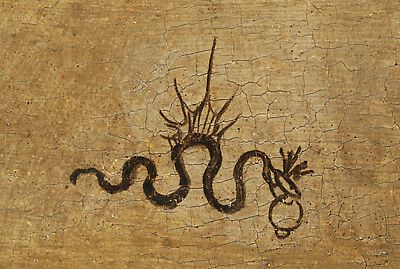
Artist's insignia bottom left: winged serpent with elevated wings, facing right
Signature / Dating
Artist's insignia bottom left: winged serpent with elevated wings, facing right
[cda 2013]
- Inscriptions
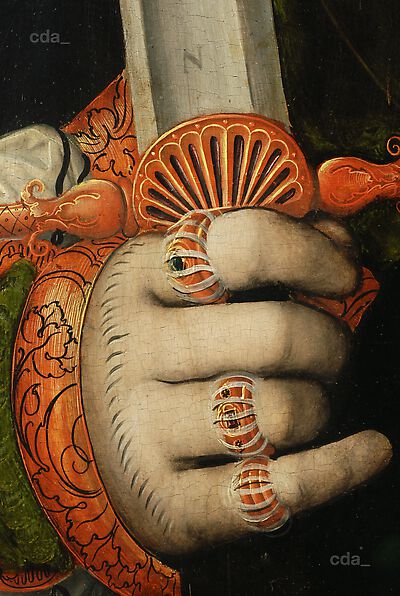
- on the sword: 'N'
- on the coin:
'LVDOVICUS PRIM[us]: [D for Dei is missing] GRACIA: …Inscriptions
Inscriptions:
- on the sword: 'N'
- on the coin:
'LVDOVICUS PRIM[us]: [D for Dei is missing] GRACIA: R[ex]: BO[emiae]:'
[Cat. Kassel 1997, 70]
- Labels
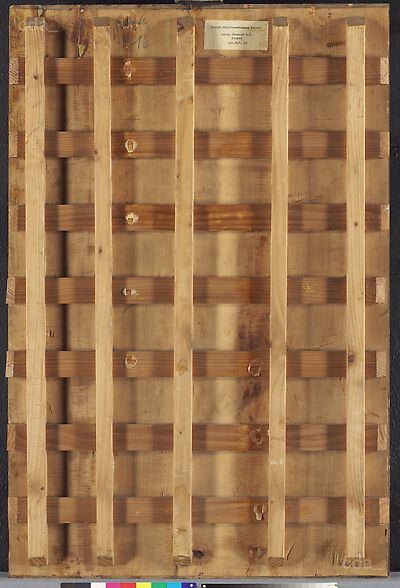
Reverse of the panel:
- label from the Staatl. Museen Kassel[Cat. Kassel 1997, 70]
Labels
later inscription, stamps, seals, labels:
Reverse of the panel:
- label from the Staatl. Museen Kassel
[Cat. Kassel 1997, 70]
- Owner
- Museumslandschaft Hessen Kassel
- Repository
- Gemäldegalerie Alte Meister, Kassel
- Location
- Kassel
- CDA ID
- DE_MHK_GK16
- FR (1978) Nr.
- FR230H
- Persistent Link
- https://lucascranach.org/en/DE_MHK_GK16/
Provenance
- probably acquired as early as the 16th or the early 17th century; first recorded under Landgrave Carl (reg. 1677-1733)
- lost under King Jérôme
- 1817 rediscovered in Kassel
[Cat. Kassel 1997, 70]
Exhibitions
Frankfurt, London 2007/2008, no. 99
Rome 2010, no. 31
Gotha/Kassel 2015, no. 94
Literature
| Reference on page | Catalogue Number | Figure / Plate | |||||||||||||
| Cat. Coburg 2018 | 192, fn. 4 | under no. 42 | |||||||||||||
|
|||||||||||||||
| Exhib. Cat. Prague 2016 | 145 | ||||||||||||||
|
|||||||||||||||
| Exhib. Cat. Gotha, Kassel 2015 | 270, 271 | 94 | Pl. p. 271 | ||||||||||||
|
|||||||||||||||
| Lange 2015 | 30, 40 | ||||||||||||||
|
|||||||||||||||
| Exhib. Cat. Rome 2010 | 231 - 233 | No. 31 | Pl. p. 233 | ||||||||||||
|
|||||||||||||||
| Exhib. Cat. Frankfurt 2007 | 320-321 | 99 | p. 321 | ||||||||||||
|
|||||||||||||||
| Cat. Kassel 1997 | 70-76 | ||||||||||||||
|
|||||||||||||||
| Cat. Kassel 1996 | |||||||||||||||
|
|||||||||||||||
| Cat. Kassel 1982 | 27-29 | p. 76 | |||||||||||||
|
|||||||||||||||
| Friedländer, Rosenberg 1979 | 117 | 230H | |||||||||||||
|
|||||||||||||||
| Cat. Kassel 1969 | 17, 78 | pl. 5 | |||||||||||||
|
|||||||||||||||
| Cat. Kassel 1958 | 47 | 16 | |||||||||||||
|
|||||||||||||||
| Friedländer, Rosenberg 1932 | 190H | ||||||||||||||
|
|||||||||||||||
| Cat. Kassel 1929 | 18, 99 | 16 | |||||||||||||
|
|||||||||||||||
| Glaser 1923 | 233 | ||||||||||||||
|
|||||||||||||||
| Cat. Kassel 1913 | 13 | 16 | |||||||||||||
|
|||||||||||||||
| Michaelson 1902 | 108 | ||||||||||||||
|
|||||||||||||||
| Cat. Kassel 1888 | 5 | 7 | |||||||||||||
|
|||||||||||||||
| Cat. Kassel 1877 | 2 | 11 | |||||||||||||
|
|||||||||||||||
| Cat. Kassel 1866 | 31 | ||||||||||||||
|
|||||||||||||||
| Lotz 1862 | 139 | 11 | |||||||||||||
|
|||||||||||||||
| Cat. Kassel 1845 | 4 | 11 | |||||||||||||
|
|||||||||||||||
| Cat. Kassel 1830 | 3 | 11 | |||||||||||||
|
|||||||||||||||
| Cat. Kassel 1819 | 2-3 | 10 | |||||||||||||
|
|||||||||||||||
| Cat. Kassel 1783 | 180 | 55 | |||||||||||||
|
|||||||||||||||
Research History / Discussion
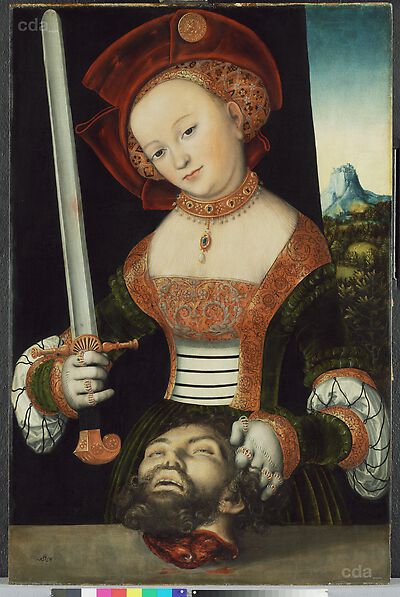
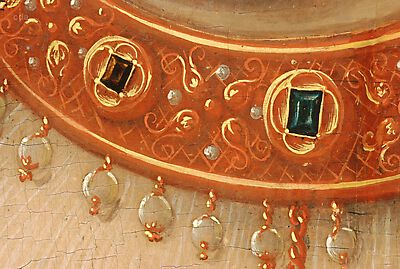
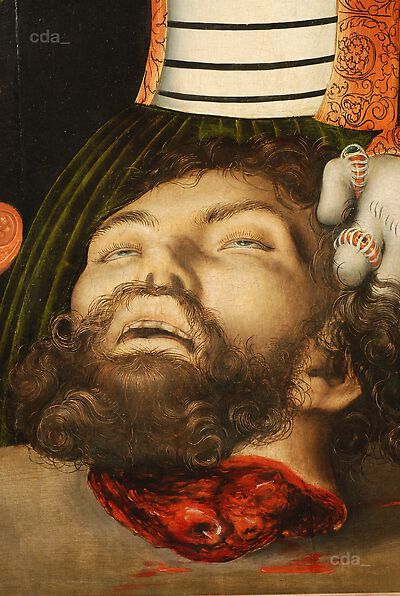
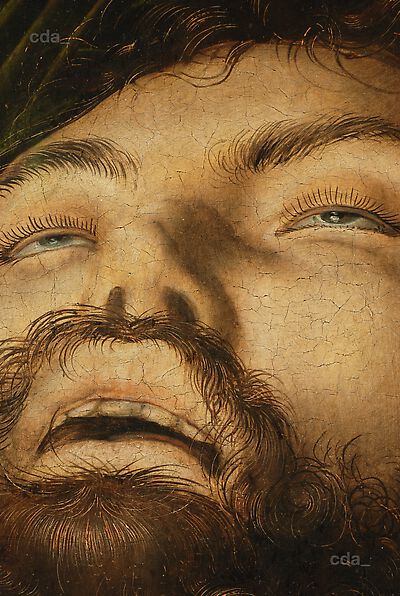
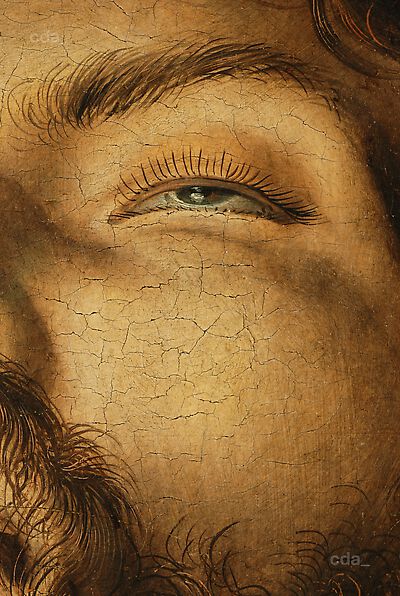
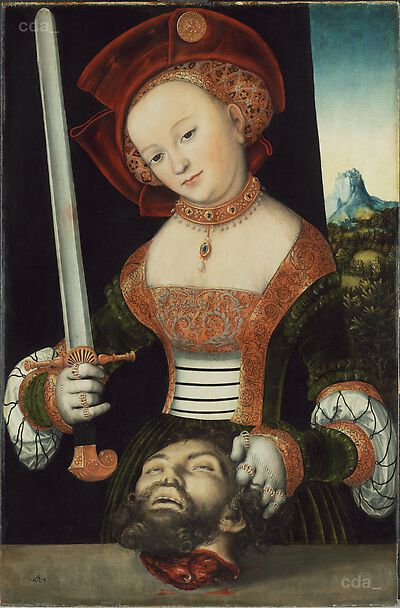
The representation of Judith in Kassel also proports a religious political statement. In this context the thaler on her beret plays a particular role. Its exposed position directly on the central axis above the head of Holofernes indicates that it is not merely intended as a decorative element, but correlates with the subject of the painting. In this respect it resembles all the medallions on panel paintings that have a specific meaning. For example in portraits by Dürer Emperor Maximilian wears a portrait medallion depicting the Virgin, his patron saint, on his beret. The saxon chancellor Georg Brück was portrayed by Cranach with a portrait medallion of Johann Friedrich to express his goodwill as well as to demonstrate his loyalty to the elector. The thaler on Judith's beret alludes to Ludwig I. of Bohemia, who went down in history as a fighter against the Turks. In 1526, aged only 20, he lost his life at the battle of Mohacz. The viewer who can interpret the Latin circumscription on the thaler is reminded of the soldier who fought against the Turks and fell so young and could thus interpret the Kassel Judith as an avenger against the Turks as was the case in slightly late works by Sixt Birck and Hans Sachs. By equating the Assyrians with the Turks they refer to the current situation in their works and refer to Luther's recommendation that the Book of Judith yields a 'good, solemn, valiant tragedy'. Admittedly in this case the Judith in Kassel does not embody a protestant symbolic figure, but rather refers to the common enemy of the empire, with whom both catholics and protestants were in conflict.
[Cat. Kassel 1997, 73]
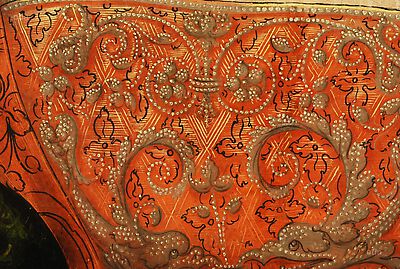
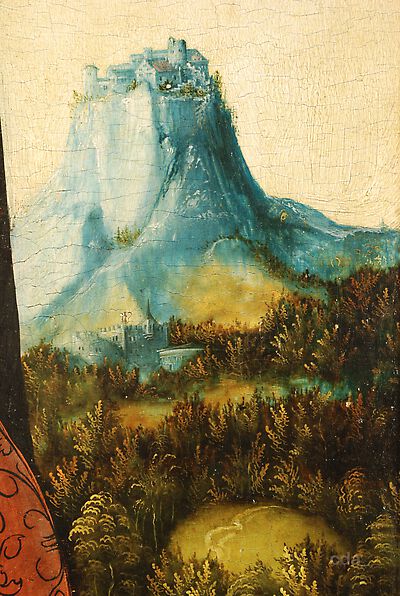
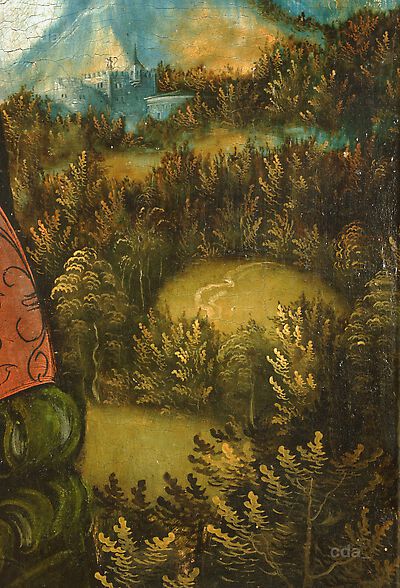
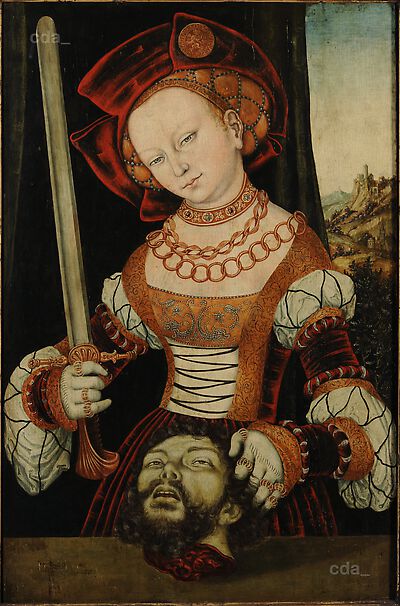
[...] It is rare that the background like here in the painting from Kassel is complemented by a wonderful view of a landscape. [1] Here the obliquely cut dark backdrop can be associated with the field commander's tent, the scene of the crime. The eleborate attire of the sitter was employed in a slightly modified form in the ideal portrait of a courtly lady from about 1530. [...]
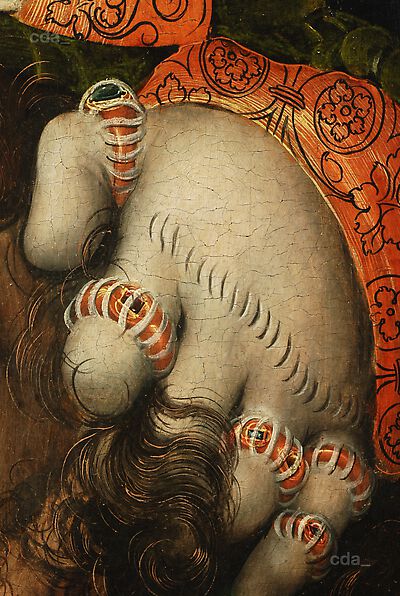
In contrast to other depictions of the subject it is striking that here the figure of Judith, who is generally turned further to the left and positioned at an angle within the pictorial space, is distinctly frontal. With this device Cranach recalls depictions of 'Justitia', which also have the upright sword as a symbol of juristdiction in common. Examples may be found in Cranach's work as well as on contemporary Saxon electoral coins.[2] These similarities underline the symbolic significance of Judith as an example of the divine justice carried out against Holofernes. The initial 'N' on the blade of the bloody sword just above the hilt refers to King Nebuchadnezzar, to whom Holofernes served as field commander. [3] This is associated with a clear warning to the tyrannical king, who should be afraid of God's justice.
[1] It is assumed that Cranach draws on the venetian type. Exhib. Cat. Basel 1974, 418.
[2] Exhib. Cat. Brussels 2010, 197; Cat. Kassel 1997, 74
[3] Exhib. Cat. Frankfurt 2007, 320
[Exhib. Cat. Gotha, Kassel 2015, 270]