- Attributions
-
Lucas Cranach the Elder (and Workshop)
Lucas Cranach the Elder
Attributions
| Lucas Cranach the Elder (and Workshop) | [Exhib. Cat. - Düsseldorf 2017, 117, No. 16] |
| Lucas Cranach the Elder | [Exhib. Cat. Gotha 2015, No. 7] [Statens Museum for Kunst, revised 2013] |
- Dating
- about 1510-1512
about 1512-1517
Dating
| about 1510-1512 | [Exhib. Cat. Düsseldorf 2017, 117, No. 16] [Exhib. Cat. Gotha 2015, No. 7] |
| about 1512 | [Exhib. Cat. Hamburg 2003, 167, No. 4a] |
| about 1512-1517 | [Statens Museum for Kunst, revised 2013] |
- Dimensions
- Dimensions of support: 96.5 x 80.5 cm
Dimensions
Dimensions of support: 96.5 x 80.5 cm
Dimensions including frame: 111 x 95 cm
[Statens Museum for Kunst, revised 2013]
- Signature / Dating
None
- Labels
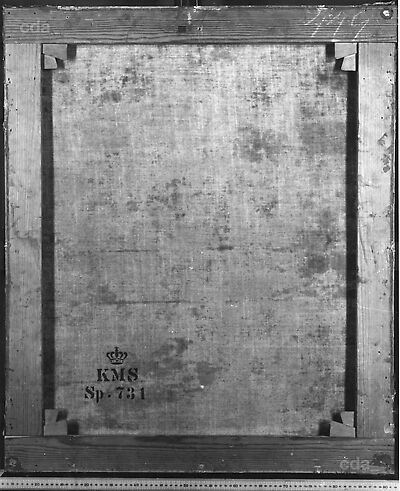
Reverse of the canvas: - at bottom left:
stencil in black paint: '(crown motif) [/] KMS [/] …Labels
later inscription, stamps, seals, labels:
Reverse of the canvas: - at bottom left:
stencil in black paint: '(crown motif) [/] KMS [/] Sp. 731'
Reverse of the stretcher:
- on top member, right:
in white chalk: '449'
[cda 2013]
- Owner
- Statens Museum for Kunst, Copenhagen
- Repository
- Statens Museum for Kunst, Copenhagen
- Location
- Copenhagen
- CDA ID
- DK_SMK_KMSsp731
- FR (1978) Nr.
- FR036
- Persistent Link
- https://lucascranach.org/en/DK_SMK_KMSsp731/
Provenance
- 1784: from the Christiansborg Furniture Chamber
[Statens Museum for Kunst, revised 2013]
Exhibitions
Stockholm 1988
Copenhagen 2002
Hamburg 2003
Gotha, Kassel 2015, No. 7
Düsseldorf 2017, No. 16
Literature
| Reference on page | Catalogue Number | Figure / Plate | |||||||||||||
| Exhib. Cat. Düsseldorf 2017 | 117 | No. 16 | |||||||||||||
|
|||||||||||||||
| Exhib. Cat. Gotha, Kassel 2015 | 102, 103, 105 | 7 | Pl. p. 105 | ||||||||||||
|
|||||||||||||||
| Exhib. Cat. Weimar 2015 | 130 | ||||||||||||||
|
|||||||||||||||
| CDA.Bloh 2005 | 175 | ||||||||||||||
|
|||||||||||||||
| Exhib. Cat. Prague 2005 | 90 (English version 37) | under no. 18 | |||||||||||||
|
|||||||||||||||
| Exhib. Cat. Hamburg 2003 | 26, 167 | 004a | Pl. 4a | ||||||||||||
|
|||||||||||||||
| Exhib. Cat. Copenhagen 2002 | 32-34, 68 | No. 12 | Fig. p. 34 | ||||||||||||
|
|||||||||||||||
| Exhib. Cat. Stockholm 1988 | 43 | ||||||||||||||
|
|||||||||||||||
| Friedländer, Rosenberg 1979 | under No. 36 | ||||||||||||||
|
|||||||||||||||
| Friedländer, Rosenberg 1932 | 18, 35 | Fig. | |||||||||||||
|
|||||||||||||||
Research History / Discussion
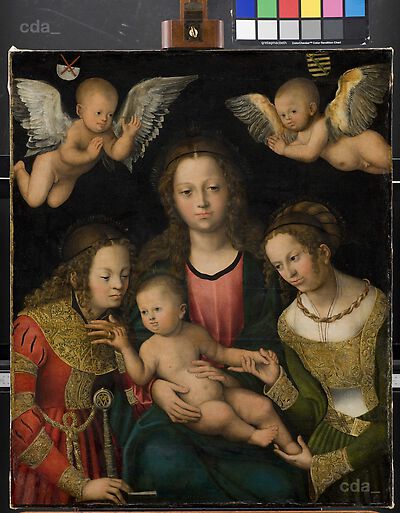
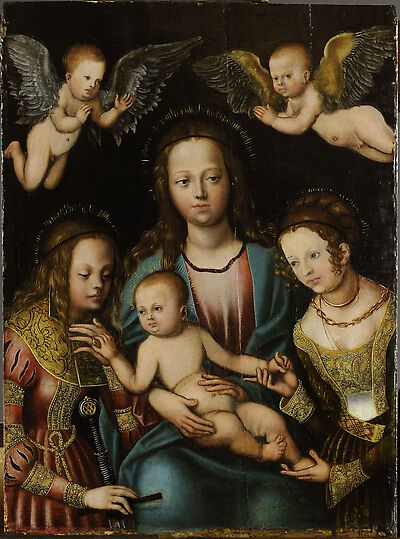
DK_KMSsp730_FR036 could acc. to [Friedländer, Rosenberg 1979, No. 36] be the left-wing to "Virgin and Child between the blessed saints Catherine and Barbara" (DK_KMSsp730_FR-none). Arguments in favor of the theory are the two images (almost) the same height and F & R’s presumption of a common provenance (from Gottorp Castle) [however it is not certain that even the "Virgin and Child ..." are from Gottorp]. Arguments against the theory are differences in style, the characters' scale and backgrounds.
[Mette Kokkenborg, Statens Museum for Kunst, 2013]
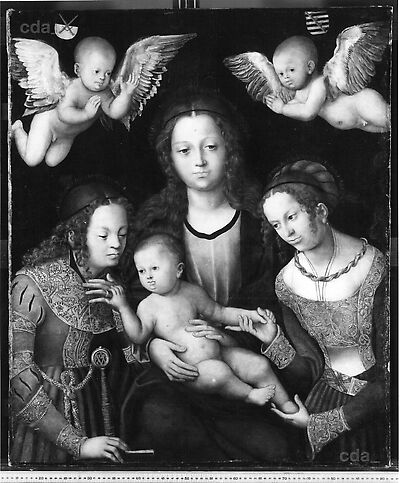
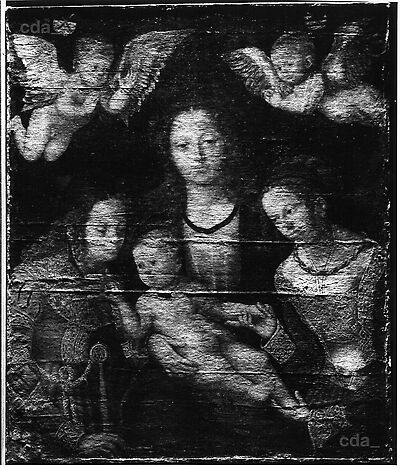
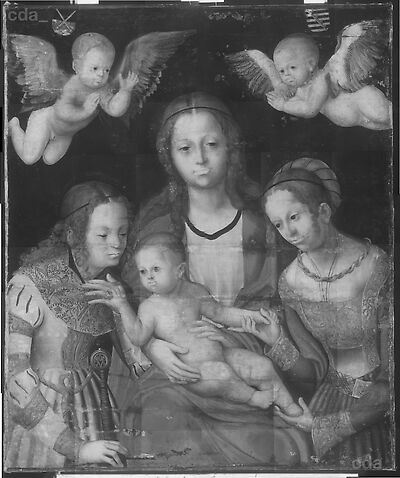
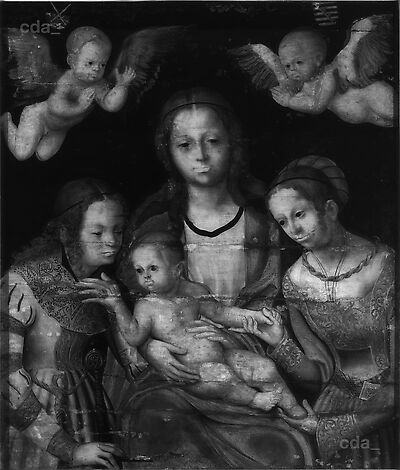
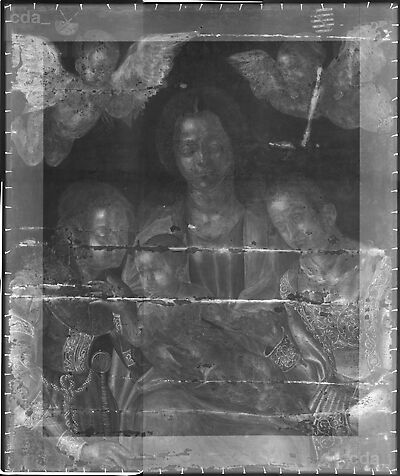
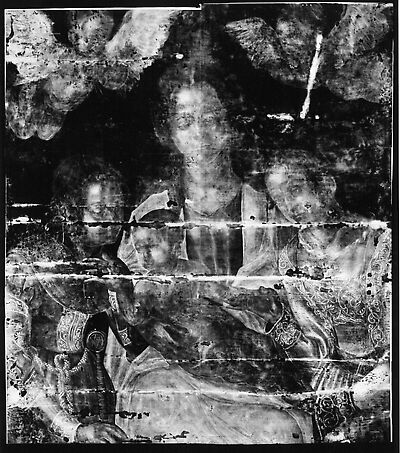
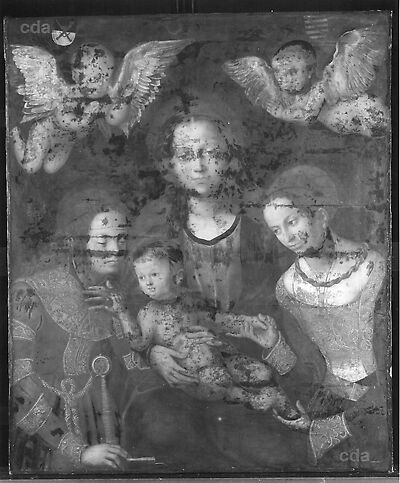
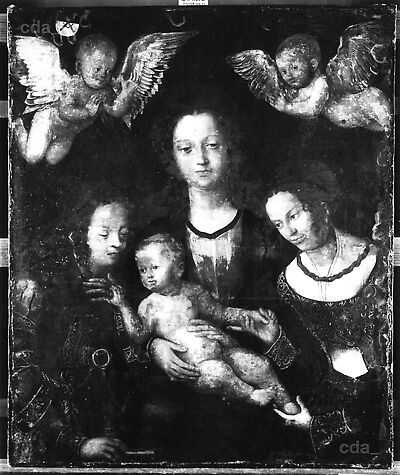
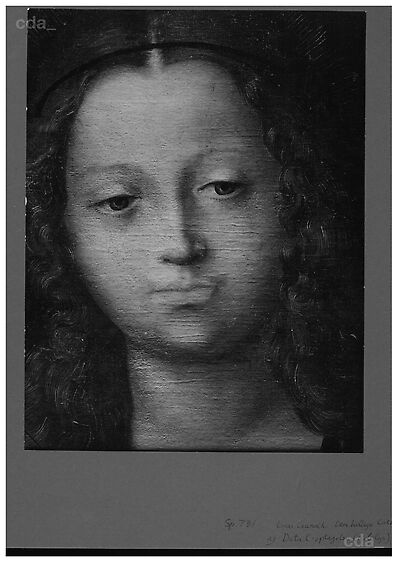
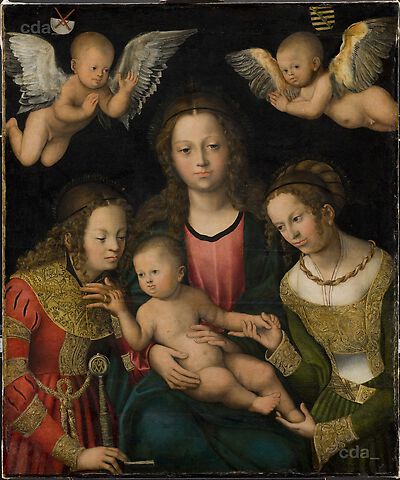
The fact that both works [DK_SMK_KMSsp730] may originally have been assembled together as part of an altar has provoked a controversial debate amongst scholars: however disregarding the almost identical format of both panels, which have only been together in the Royal collection in Copenhagen since the 18th century, the difference in scale of the figures, their stylistic variance and the divergent backgrounds argue against their common identity. [1] The central panel exhibits strong links to the somewhat larger so-called Princes‘ Altar in Dessau (about 1510), which was presumably created for the Lady Chapel in the church of the Wittenberg Castle and anticipates the composition of the panel in Copenhagen both stylistically and in the choice of motifs as well as in the evolution of the pictorial type representing a half-length figure of the Virgin and saints. [2] The serenity emanated by the painting in Copenhagen has here yielded to a formal solemnity. [3] The Dessau wing panels also depict Duke Johann the Steadfast of Saxony on the left side wearing the same attire as on the panel in Copenhagen, but against a black background and he is accompanied by St Bartholomew. A similarly clear association was established between the central panel in Copenhagen and a depiction of ‘The Virgin and Child with Sts Catharine, Barbara and Dorothea’ (about 1512-1514) [DE_smbGG-Lost_NONE-001] destroyed [lost] during the war. Here single motifs like the pose and position of the Child, how the ring is placed on the finger and the gesture of St Barbara bare more affinity than the painting in Dessau: [4] the style and format, but above all the landscape background, which being untypical for Cranach suggests the hand of an apprentice, caused scholars to speculate that the panel formerly in Berlin may have been the pendant to the donor panel in Copenhagen. [5] Influences from Netherlandish and Italian sources as well as the example of Albrecht Dürer have been discussed with varying degrees of conviction in relation to the origin of the pictorial type of the Virgin. [6] While the facial type of the Virgin corresponds with the common female physiognomy painted by Cranach between 1500 and 1510, as represented among others by the ‘Venus’ in St Petersburg (1509), [7] a greater similarity between the female heads on the wing panel and the saintly figures on the Catharine Altar in Dresden can be observed. [8]
The correspondence between the altarpieces mentioned and the paintings in Copenhagen not only supply insight into their original context but also demonstrate for Cranach’s early production of altarpieces a characteristic exploitation of an established repertoire of motifs, whose prototypes were taken in part from the artist’s graphic works. [10]
[1] Friedländer, Rosenberg 1979, 76, No. 36; Exhib. Cat. Copenhagen 2002, 91, Nos. 12 and 13; Exhib. Cat. Hamburg 2003, 167, Nos. 4 and 4a.
[2] Flechsig 1900, 85f.; Friedländer, Rosenberg 1979, 72, No. 20; Cat. Dessau 1996, 23-25, No. 7.
[3] Exhib. Cat. Hamburg 2003, 167, No. 4a
[4] Friedländer, Rosenberg 1979, 76, No. 37; Erichsen 1994, 164, Fn. 4; Exhib. Cat. Hamburg 2003, 167, No. 4
[5] Ebenda. A copy of the Berlin painting exists in the Jáchymov (Sankt Joachimsthal), Czech Republic. Erichsen 1994, 157.
[6] Schade 1974, 38-40; Friedländer, Rosenberg 1979, 72, No. 20; Cat. Dessau 1996, 24.
[7] Exhib. Cat. Hamburg 2003, 167, No. 4a.
[8] Friedländer, Rosenberg 1979, 68f., Nos. 12-15 and S. 76, No. 36
[9] Further panels with the Virgin showing the Legend of St Catherine exist in Dessau (1516) [DE_AGGD_10] and Budapest (um 1516-18) [HU_SMB_133]. Friedländer, Rosenberg 1979, 87, Nos. 85 and 85
[10] Erichsen 1994, 156-161
[Carrasco, Exhib. Cat. Gotha, Kassel 2015, 102, 103, Nos. 6, 7]
Eine mögliche Zusammengehörigkeit der beiden Werke [DK_SMK_KMSsp730] innerhalb eines Altarprogramms wurde in der Forschung kontrovers diskutiert: so sprechen ungeachtet des annähernd gleichen Formates der Täfeln, die erst seit dem 18. Jahrhundert gemeinsam in der Königlichen Sammlung in Kopenhagen verwahrt werden, deren unterschiedlicher Figurenmaßstab, stilistische Abweichungen und die verschiedenartigen Bildgründe gegen eine originäre Verbindung. [1] Das Mittelbild weist enge Anbindung an den etwas großformatigeren sogenannten 'Fürstenaltar' aus Dessau (um 1510) auf, der vermutlich für die Marienkapelle der wittenberger Schlosskirche entstand und die Kopenhagener Tafel kompositorisch, motivisch und stilistisch sowie im Bildtypus der halbfigurigen Gottesmutter mit Heiligen vorwegnimmt. [2] Die heitere Ausstrahlung des Bildes ist dort einem feierlichen Ernst gewichen. [3] Die Dessauer Seitenflügel zeigen neben Herzog Johann den Beständigen von Sachsen auf der linken Seite, der in gleichem Habitus wie in Kopenhagen, hier allerdings vor schwarzem Grund und in Begleitung des Heiligen Bartholomäus erscheint. Eine ähnlich deutliche Verwandtschaft zur Kopenhagener Mitteltafel wurde auch für das kriegszerstörte Bild einer 'Madonna mit Kind und den Heiligen Margareta, Katharina, Barbara und Dorothea' (um 1512-1514) [DE_smbGG-Lost_NONE-001] festgestellt, das wiederum in Einzelmotiven wie der Pose und Wendung des Kindes, dem Anstecken des Ringes und den Gesten der Heiligen Barbara dem erstgenannten Werk noch näher steht als das Bild in Dessau: [4] Stil und Format, vor allem jedoch der Landschaftshintergrund, dessen für Cranach untypische Himmelsgestaltung wohl eine Schülerhand verrät, ließen die Forschung in der ehemaligen Berliner Tafel das Pendant zum Kopenhagener Stifterflügel vermuten. [5] Für den Typus des Madonnenbildes wurde mit unterschiedlicher Überzeugungskraft der Einfluss niederländischer und italienischer Bildkunst sowie das Vorbild Albrecht Dürers diskutiert. [6] Während der Gesichtstypus Mariens der bei Cranach zwischen 1500 und 1510 üblichen weiblichen Physiognomie entspricht, wie sie u. a. in der St. Petersburger 'Venus' (1509) zum ausdruck kommt, [7] wurde für die Frauenköpfe des Seitenflügels eine Verwandtschaft mit den Heiligenfiguren des Dresdner 'Katharinenaltars (1506) beobachtet. [8]
Die Übereinstimmungen zwischen den genannten Altar-Werken [9] und den Kopenhagener Bildern liefern nicht nur einen Eindruck von deren ursprünglichem Zusammenhang, sie demostrieren zugleich exemplarisch die für die frühe Altarproduktion Cranachs charakteristische Verwertung eines etablierten Motivrepertoires, dessen vorlagen sich teilweise auch aus grafischen Arbeiten des Künstlers speisten. [10]
[1] Friedländer, Rosenberg 1979, 76, No. 36; Exhib. Cat. copenhagen 2002, 91, Nos. 12 und 13; Exhib. Cat. Hamburg 2003, 167, Nos. 4 und 4a.
[2] Flechsig 1900, 85f.; Friedländer, Rosenberg 1979, 72, No. 20; Cat. Dessau 1996, 23-25, No. 7.
[3] Exhib. Cat. Hamburg 2003, 167, No. 4a
[4] Friedländer, Rosenberg 1979, 76, No. 37; Erichsen 1994, 164, Fn. 4; Exhib. Cat. Hamburg 2003, 167, No. 4
[5] Ebenda. eine Kopie des Berliner bildes befindet sich im tschechischen Jáchymov (Sankt Joachimsthal). Erichsen 1994, 157.
[6] Schade 1974, 38-40; Friedländer, Rosenberg 1979, 72, No. 20; Cat. Dessau 1996, 24.
[7] Exhib. Cat. Hamburg 2003, 167, No. 4a.
[8] Friedländer, Rosenberg 1979, 68f., Nos. 12-15 und S. 76, No. 36
[9] Weitere Madonnentafeln mit einer Darstellung der Katharinenlegende befinden sich in Dessau (1516) [DE_AGGD_10] und Budapest (um 1516-18) [HU_SMB_133]. Friedländer, Rosenberg 1979, 87, Nos. 85 und 85
[10] Erichsen 1994, 156-161
[Carrasco, Exhib. Cat. Gotha, Kassel 2015, 102, 103, Nos. 6, 7]